
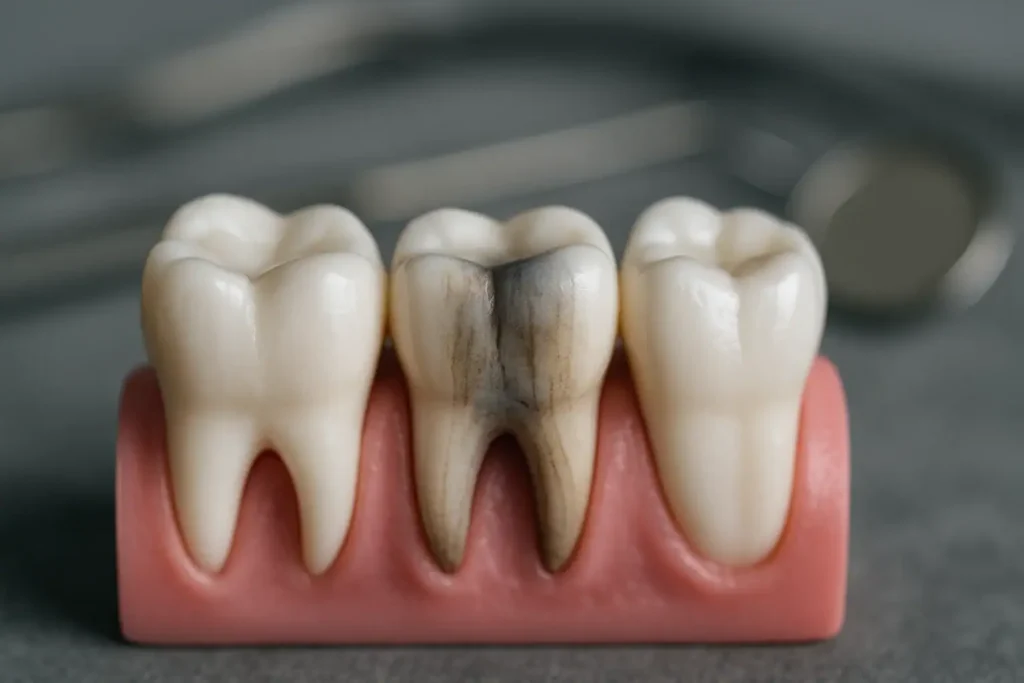
A dead tooth is more common than most patients realize, and in many cases, it develops silently. As a dentist with years of clinical experience treating patients in Harwood Heights and the greater Chicago area, I’ve seen how early detection can make the difference between saving and losing a tooth.
In this guide, we’ll break down everything you need to know about dead tooth symptoms, causes, and treatments, so you can take action before complications arise.
What Is a Dead Tooth?
A dead tooth refers to a tooth that no longer has a living nerve inside it. The pulp (soft tissue within the tooth) becomes damaged or infected, cutting off the blood supply. Once this happens, the tooth is no longer “alive,” even though it may still be physically present in your mouth, which is why it’s important to have it evaluated by the best dentist as early as possible to prevent further complications.
Dead Tooth Symptoms: Warning Signs You Shouldn’t Ignore
Recognizing dead tooth symptoms early can help prevent serious dental issues like infections or abscesses.
Common Signs of a Dead Tooth (Detailed Explanation)
Understanding the signs of a dead tooth in detail can help you catch the problem early before it turns into a painful infection or requires more complex treatment.
1. Discoloration (Tooth Turning Yellow, Gray, or Black)
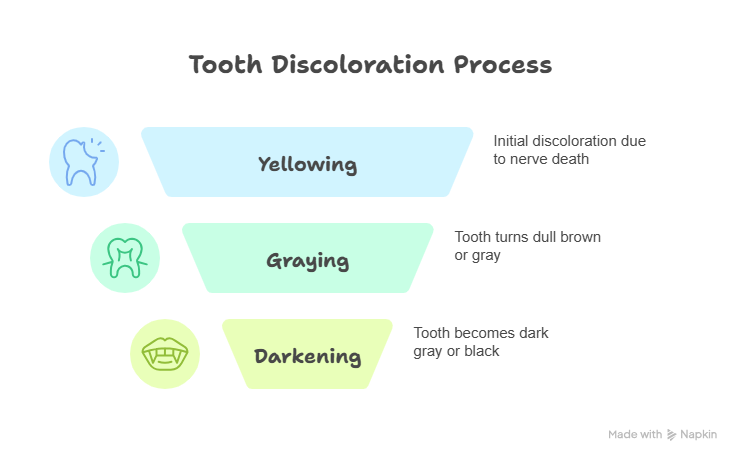
One of the earliest and most visible signs of a dead tooth is a change in color. A healthy tooth typically has a bright, slightly translucent white appearance. However, when the nerve inside the tooth dies:
- The tooth may turn yellow at first
- Progress to gray or dull brown
- Eventually, they become dark gray or black in advanced stages
This discoloration happens because the internal tissue breaks down, and blood flow to the tooth stops.
Important:
Unlike surface stains from coffee or smoking, this type of discoloration comes from inside the tooth, so it cannot be fixed with whitening treatments.
2. Persistent Pain or Sensitivity
Pain is one of the most confusing dead tooth symptoms because it doesn’t always behave the same way.
You may experience:
- Sharp pain when biting or chewing
- Dull, constant ache around the tooth
- Sensitivity that lingers longer than normal
- Pain that comes and goes without a clear trigger
Interestingly, some dead teeth cause no pain at all, especially once the nerve has completely died. However, pain often occurs when:
- Infection develops around the root
- Pressure builds inside the tooth
- Surrounding tissues become inflamed
If pain suddenly disappears after being severe, it does NOT mean the problem is gone, it could mean the nerve has died.
3. Swelling Around the Tooth or Gums
Swelling is a strong indicator that infection is present. When bacteria spread inside a dead tooth, the body reacts, leading to inflammation.
You may notice:
- Swollen or tender gums near the affected tooth
- A small bump or pimple-like abscess on the gum
- Redness and warmth in the area
- Pain when touching the gums
In more advanced cases:
- Swelling may spread to the jaw, face, or cheek
- You might feel pressure or tightness
This is a serious warning sign. Untreated swelling can lead to abscess formation and infection spreading to nearby areas.
4. Bad Taste or Persistent Odor
A dead tooth often creates an environment where bacteria thrive. As infection develops, it can produce a noticeable and unpleasant taste or smell.
Common experiences include:
- A constant bad taste in your mouth
- Foul breath (halitosis) that doesn’t go away with brushing
- A metallic or sour taste near the affected tooth
- Occasional discharge if an abscess is present
This happens because:
- Decaying tissue inside the tooth releases toxins
- Bacteria produce sulfur compounds that cause odor
If you notice bad breath that won’t improve with oral hygiene, it could be one of the hidden signs of a dead tooth.
5. Loose Tooth Feeling or Pressure Sensation
As the internal structure of the tooth weakens, it may start to feel different when you bite or touch it.
You might notice:
- The tooth feels slightly loose or unstable
- A sense of pressure when chewing
- Discomfort when applying even light force
- The tooth feels “higher” than others when biting
This occurs because:
- The supporting tissues around the tooth become inflamed
- Bone and ligament structures may begin to weaken
- Infection affects the stability of the tooth
Even slight mobility is not normal and should always be evaluated by a dentist.
Don’t Ignore These Signs
If you notice even one of these signs of a dead tooth, it’s important not to wait. What starts as a minor issue can quickly turn into:
- Severe infection
- Abscess formation
- Bone loss
- Tooth loss
Early diagnosis makes it much easier to treat and save the tooth.
When in Doubt, Get It Checked
Many patients delay treatment because the symptoms seem mild or temporary. But with a dead tooth, early action is the key to avoiding pain, complications, and costly procedures later on.
What Causes a Dead Tooth?
Understanding what causes a dead tooth is essential not just for treatment, but for prevention. In my experience treating patients across Harwood Heights and Chicago, most cases don’t happen overnight. A dead tooth is usually the result of gradual damage that goes unnoticed until symptoms appear.
Let’s break down the most common causes in detail so you can recognize the risks early.
Main Causes of a Dead Tooth
1. Tooth Decay (Deep Cavities Reaching the Nerve)
Tooth decay is the #1 cause of a dead tooth I see in everyday practice.
Here’s how it typically progresses:
- It starts as a small cavity in the enamel
- Gradually moves deeper into the dentin layer
- Eventually reaches the pulp (nerve tissue) inside the tooth
Once bacteria reach the pulp:
- Infection begins inside the tooth
- Blood supply is compromised
- The nerve tissue dies
Many patients don’t feel pain in the early stages, which is why decay often goes untreated until it’s advanced.
In Chicago, especially with diets high in sugar and acidic beverages, untreated cavities are one of the biggest reasons patients end up needing root canal treatment.
2. Dental Trauma (Injury or Sudden Impact)
Another major factor in what causes a dead tooth is trauma.
This can happen due to:
- Sports injuries (common in teens and adults)
- Car accidents
- Falls or direct hits to the face
- Biting down on very hard objects
Even if the tooth doesn’t crack visibly, the impact can:
- Damage the blood vessels inside the tooth
- Cut off circulation to the pulp
- Lead to delayed nerve death (sometimes weeks or months later)
I’ve seen many patients in Harwood Heights who ignored a minor injury, only to return later with discoloration, a classic sign that the tooth has died internally.
3. Repeated Dental Procedures on the Same Tooth
Sometimes, the treatment history of a tooth contributes to its condition.
If a tooth undergoes multiple procedures, such as:
- Large fillings
- Repeated drilling
- Crown placements
- Restorative work over time
It can lead to:
- Gradual irritation of the pulp
- Reduced blood supply
- Increased sensitivity and inflammation
Over time, this repeated stress can cause the nerve to fail, resulting in a dead tooth.
This is why we always aim for conservative and precise treatment planning, especially for teeth that have already been worked on multiple times.
4. Untreated Infection Inside the Tooth
When bacteria enter the tooth and are not treated promptly, infection spreads deeper.
This often happens when:
- A cavity is ignored
- A cracked tooth allows bacteria inside
- Old fillings leak and allow decay underneath
As infection progresses:
- Pus may form inside the tooth
- Pressure builds up
- The pulp tissue becomes inflamed and eventually dies
If left untreated, this can lead to:
- Abscess formation
- Severe pain and swelling
- Infection spreads to the surrounding bone
In many Chicago patients, delayed dental visits turn a simple issue into a serious infection requiring a root canal or extraction.
5. Gum Disease (Advanced Periodontal Issues)
Gum disease doesn’t just affect your gums it can also lead to a dead tooth in advanced stages.
Here’s how:
- Bacteria build up along the gum line
- Infection spreads below the gums
- The bone supporting the tooth begins to deteriorate
- Deep pockets form, allowing bacteria to reach the root
Over time:
- The tooth loses its support
- Blood supply to the tooth is affected
- The nerve can die due to chronic inflammation
Patients with untreated periodontal disease often experience loose teeth, which can eventually become non-vital (dead).
A Key Insight Most Patients Don’t Realize
One important thing I always tell my patients:
A dead tooth is usually the result of neglect, delay, or unnoticed damage not a sudden problem.
In most cases, there were early warning signs like:
- Mild sensitivity
- Occasional discomfort
- Small cavities
- Minor trauma
But without timely treatment, these issues progress silently.
How to Reduce Your Risk
If you want to avoid dealing with a dead tooth, focus on prevention:
- Don’t ignore small cavities
- Get regular dental checkups
- Treat sensitivity early
- Wear a mouthguard during sports
- Address gum issues before they worsen
When to Take Action
If you suspect any issue related to what causes a dead tooth, whether it’s trauma, decay, or gum problems, it’s always better to get it checked early.
In my clinical experience, early intervention can often:
- Save the natural tooth
- Avoid complex procedures
- Reduce long-term costs
How to Treat a Dead Tooth: Your Options Explained
If you’re wondering how to treat a dead tooth, the good news is that modern dentistry offers effective solutions depending on the condition of the tooth.
1. Root Canal Treatment (Most Common Solution)
A root canal is the primary method to fix a dead tooth.
- Removes infected or dead pulp
- Cleans and disinfects the inside of the tooth
- Seals it to prevent reinfection
- Often followed by a dental crown for strength
This option allows you to preserve your natural tooth structure.
2. Dental Crown
After a root canal, a crown is placed to restore function and appearance.
- Protects the weakened tooth
- Improves aesthetics
- Restores full chewing ability
3. Tooth Extraction (When Necessary)
In severe cases, where the tooth cannot be saved, extraction may be required.
- Prevents infection from spreading
- Eliminates pain
- Creates space for replacement options like implants
4. Dental Implants (Best Replacement Option)
If extraction is needed, dental implants are the most reliable way to replace a missing tooth.
- Permanent and natural-looking
- Preserves jawbone structure
- Restores full function
How to Fix a Dead Tooth Before It Gets Worse
Many patients ask, how to fix a dead tooth quickly? The key is early intervention.
Practical Steps to Take
- Schedule a dental exam as soon as symptoms appear
- Avoid chewing on the affected side
- Maintain good oral hygiene
- Don’t delay treatment; waiting can lead to infection
Can a Dead Tooth Be Prevented?
Yes, preventing a dead tooth is often easier than treating one.
Prevention Tips
- Brush and floss daily
- Visit your dentist regularly for checkups
- Treat cavities early
- Wear a mouthguard during sports
- Avoid biting hard objects
When Should You See a Dentist?
If you experience:
- Tooth discoloration
- Persistent pain
- Swelling or bad taste
These are clear dead tooth symptoms that require immediate attention.
Delaying treatment can lead to:
- Abscess formation
- Bone loss
- Spread of infection
Final Thoughts
A dead tooth might not always cause pain right away, but it should never be ignored. Understanding the signs of a dead tooth, knowing what causes a dead tooth, and acting quickly can help you save your smile and avoid more complex procedures.
Treatment in Chicago, Harwood Heights?
If you’re experiencing any dead tooth symptoms and looking for a reliable solution, expert care is just around the corner.
Visit DICC – Dental Implant and Cosmetic Center for personalized treatment and advanced dental care.
Our experienced team specializes in diagnosing and treating complex dental issues, including how to treat a dead tooth effectively using modern techniques. We offer a full range of services, including dental implants, cosmetic dentistry, dentures, general dentistry, dental hygiene, and teeth whitening, all tailored to restore your oral health and enhance your smile with precision and care.
Conveniently located in Harwood Heights, serving Chicago and the surrounding areas
Call now or book your appointment online to restore your smile with confidence
Our friendly, multilingual team is ready to serve you in English, Polish, Russian, and Arabic, ensuring you feel comfortable, understood, and confident throughout your treatment.
Don’t wait, early treatment can save your tooth and prevent future complications.
Frequently Asked Questions
1. Can a dead tooth be saved without extraction?
In many cases, yes. A dead tooth can often be saved with a root canal treatment, which removes the infected pulp and restores the tooth’s function. At DICC, we focus on preserving your natural teeth whenever possible using advanced techniques and precise diagnostics.
2. Is a dead tooth always painful?
No, not always. Some patients experience little to no pain once the nerve has died. However, dead tooth symptoms like discoloration, swelling, or bad taste may still be present. Even without pain, the tooth can still be infected and requires treatment.
3. What is the best treatment option for a dead tooth?
The best option depends on the condition of the tooth. In most cases:
- Root canal + crown is the preferred solution
- If the tooth is severely damaged, dental implants may be recommended
At DICC, we evaluate each case individually to provide the most effective and long-lasting solution.
4. How long can you leave a dead tooth untreated?
It’s not recommended to delay treatment. Leaving a dead tooth untreated can lead to:
- Infection spreading to the jawbone
- Abscess formation
- Tooth loss
Early treatment significantly reduces complications and cost.
5. Can a dead tooth cause other health problems?
Yes. An untreated infection in a dead tooth can spread beyond the tooth and affect surrounding tissues, bone, and even overall health in severe cases. That’s why timely dental care is critical.
6. Do I need a crown after treating a dead tooth?
In most cases, yes. After a root canal, the tooth becomes weaker, and placing a crown helps:
- Protect the structure
- Restore chewing strength
- Improve appearance
This is a standard part of long-term treatment success.
7. How do I know if I need a dental implant instead of saving the tooth?
If the tooth is too damaged or infected to be restored, extraction followed by a dental implant may be the best option. Implants provide:
- A permanent replacement
- Natural appearance
- Strong chewing function
Our team will guide you based on your specific condition.
8. Can I visit your clinic for both general and cosmetic dental care?
Absolutely. At DICC – Dental Implant and Cosmetic Center, we provide complete care under one roof, including:
- General dentistry (exams, fillings, cleanings)
- Cosmetic dentistry (whitening, veneers, smile makeovers)
- Restorative treatments (implants, crowns, dentures)
- This allows us to create a complete treatment plan tailored to your smile.
9. Do you accept new patients in Harwood Heights and nearby areas?
Yes, we are currently accepting new patients from Harwood Heights, Chicago, Norridge, Elmwood Park, and surrounding areas. We aim to provide accessible, patient-focused dental care for the local community.
10. Can I get treatment if I don’t have dental insurance?
Yes. We offer flexible options for patients without insurance, including financing plans. Our goal is to ensure you receive the care you need without unnecessary financial stress.
11. What languages does your dental team speak?
Our multilingual team is ready to serve you in:
- English
- Polish
- Russian
- Arabic
We make sure every patient feels comfortable, understood, and confident throughout their visit.
12. How can I book an appointment at DICC?
You can easily book your appointment through our website or call our clinic directly. We also offer convenient scheduling options, including same-day visits when available.